
House and Land
How Long Does a House and Land Build Take, and What Can Go Wrong?

Adam Quarrell
How Long Does a House and Land Build Take, and What Can Go Wrong?
3:37
House and land is popular with investors because you get a brand new home. The part that catches people out is the timeline, because your rent doesn't start until the home is finished. Here's how long it really takes and what can slow it down.
The short answer
The build itself on a house and land package typically runs around four to twelve months, depending on the builder, the size and design of the home and the time of year. Some builders quote around four to five months for a standard two-storey design once construction starts. Others say six to twelve months is more realistic.
But that isn't the whole journey. From signing the contract to getting a tenant in, you also need to allow for land titling, finance approvals, building approvals and pre-construction steps. Some developers estimate 19 to 24 months in total from land purchase to completion in certain estates, so ask the builder and developer for their real numbers, not just the headline build time.
The stages
- Contract and deposit. You sign the land and build contracts and pay the deposits.
- Land titling. If the land isn't titled yet, you can't settle on it, and the builder can't start. Titling can take several months, depending on the subdivision and the infrastructure that needs to be completed.
- Settlement on the land. After titling, settlement typically follows a few weeks later, once finance is in place.
- Pre-construction. Final plans, soil tests, permits and approvals, usually a few months.
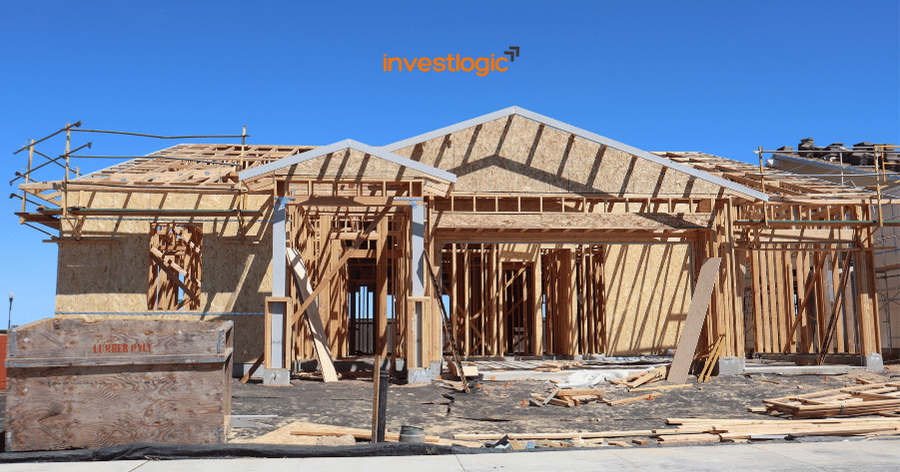
- Construction. Slab, frame, lock-up, fit-out and finishing.
- Handover and tenanting. Final inspection, defects, then a property manager finds your tenant.
What can go wrong
- Titling delays. The most common one on new estates. If the land title is late, everything after it moves back.
- Weather. Concrete can't be poured in heavy rain, and wet seasons can add weeks.
- Finance delays. Slow paperwork, valuation issues or a change in your circumstances or lender policy.
- Variations. Changing the plans or inclusions after you sign can add both cost and time.
- Trades and materials. Shortages or scheduling problems can stall a build.
- Market shifts. The longer the timeline, the more exposed you are to interest rate or lending policy changes before settlement.
What it means for your numbers
Every extra month means you're still paying holding costs, such as interest on construction loan draws, and not collecting rent. When you're comparing packages, ask the builder what the typical gap is between the estimated and the actual completion date, and build a buffer into your cashflow.
How to protect yourself
- Ask for the titling date in writing, and for how often it has moved on that estate before.
- Check the builder's history of finishing on time, ideally with references from recent clients.
- Understand how progress payments work and when each one is due.
- Avoid changing the plans after contract.
- Keep a cash buffer of a few months of holding costs.
- Confirm what the contract says about delays and who bears the cost.
Where we come in
Keeping a build on time and on budget is a big part of what Investlogic does for clients, including site inspections as needed and lining up a property manager before handover. If you're considering a new build, try our Property Match quiz to see which strategy fits.
This article is general information only and is not financial, legal or tax advice. Investlogic does not hold an Australian Financial Services Licence. Timeframes are indicative and vary by builder, location, estate and season.